

Airbus A320 Flight Simulator Guide
The Airbus A320 is the world’s most-flown airliner family and one of the most popular cockpits for public flight simulator experiences. Here’s everything you need to know before you book — and where to fly one near you.
If you’ve ever wanted to sit where an airline first officer sits, the Airbus A320 is the cockpit to choose. It’s the aircraft most public simulator centres build around, which means you have more choice of venue, price and format for the A320 than almost any other type.
The A320 family — the A318, A319, A320 and A321 — is the backbone of short- and medium-haul aviation worldwide. easyJet, Wizz Air, Delta, American, IndiGo and hundreds of other carriers fly it every day. That ubiquity is exactly why it dominates the public simulator market: the cockpit is well documented, the systems are approachable for first-timers, and the fly-by-wire handling feels noticeably different from a Boeing, which makes it a genuinely distinctive experience to try.
This guide explains what makes the A320 special in a simulator, the difference between the cockpit formats you’ll encounter, what a session typically costs, and how to choose the right venue. Every simulator we mention is drawn from our directory of verified, publicly bookable experiences.
What makes the A320 different to fly
The single biggest talking point with the A320 is its side-stick and fly-by-wire flight control system. Instead of a large yoke in front of you, you fly with a small side-stick by your right hand, and the aircraft’s computers translate your inputs into smooth, protected control movements. It’s a completely different feel to the Boeing 737’s traditional control column, and trying both is the reason many enthusiasts visit more than one simulator.
For a first-timer, the A320 is forgiving: the flight envelope protections make it hard to over-control, and the glass cockpit presents information clearly. For an experienced simmer, the depth is in the systems — the FMGC, the ECAM displays, and the autoflight logic all reward people who want to fly a realistic departure, cruise and approach.
Featured Airbus A320 Simulators
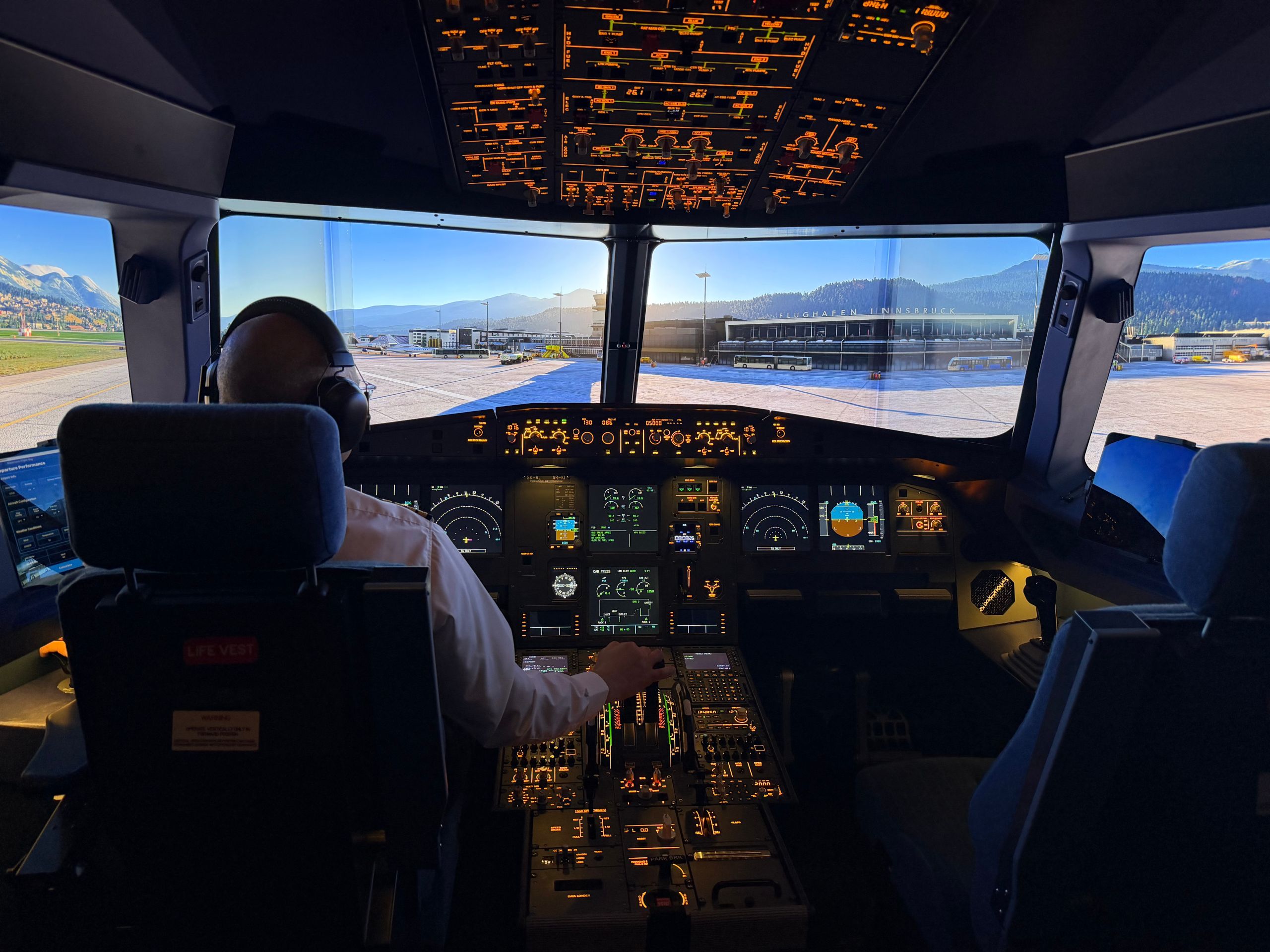
Infinity Sim Wings, Crawley
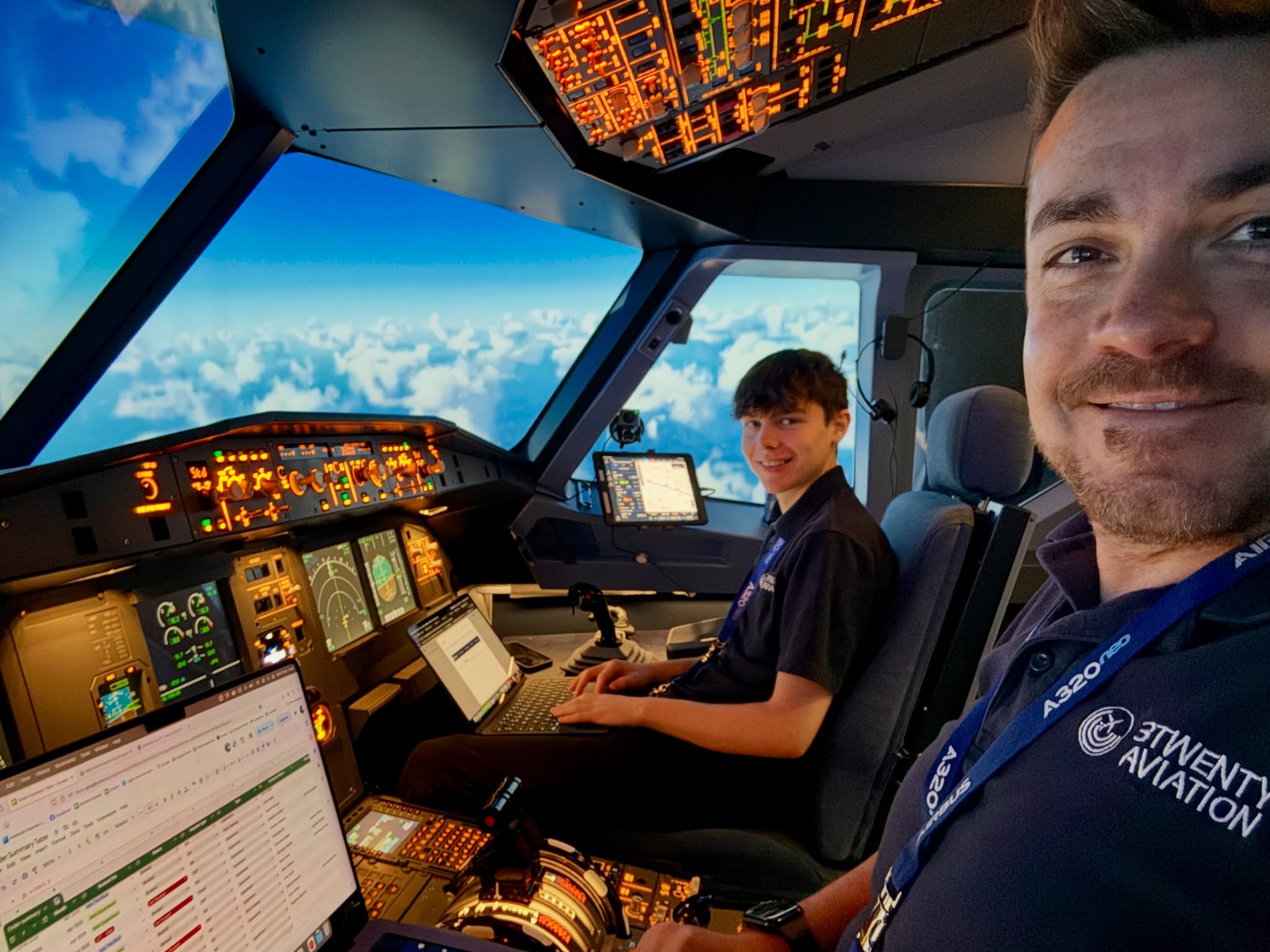
3Twenty Aviation
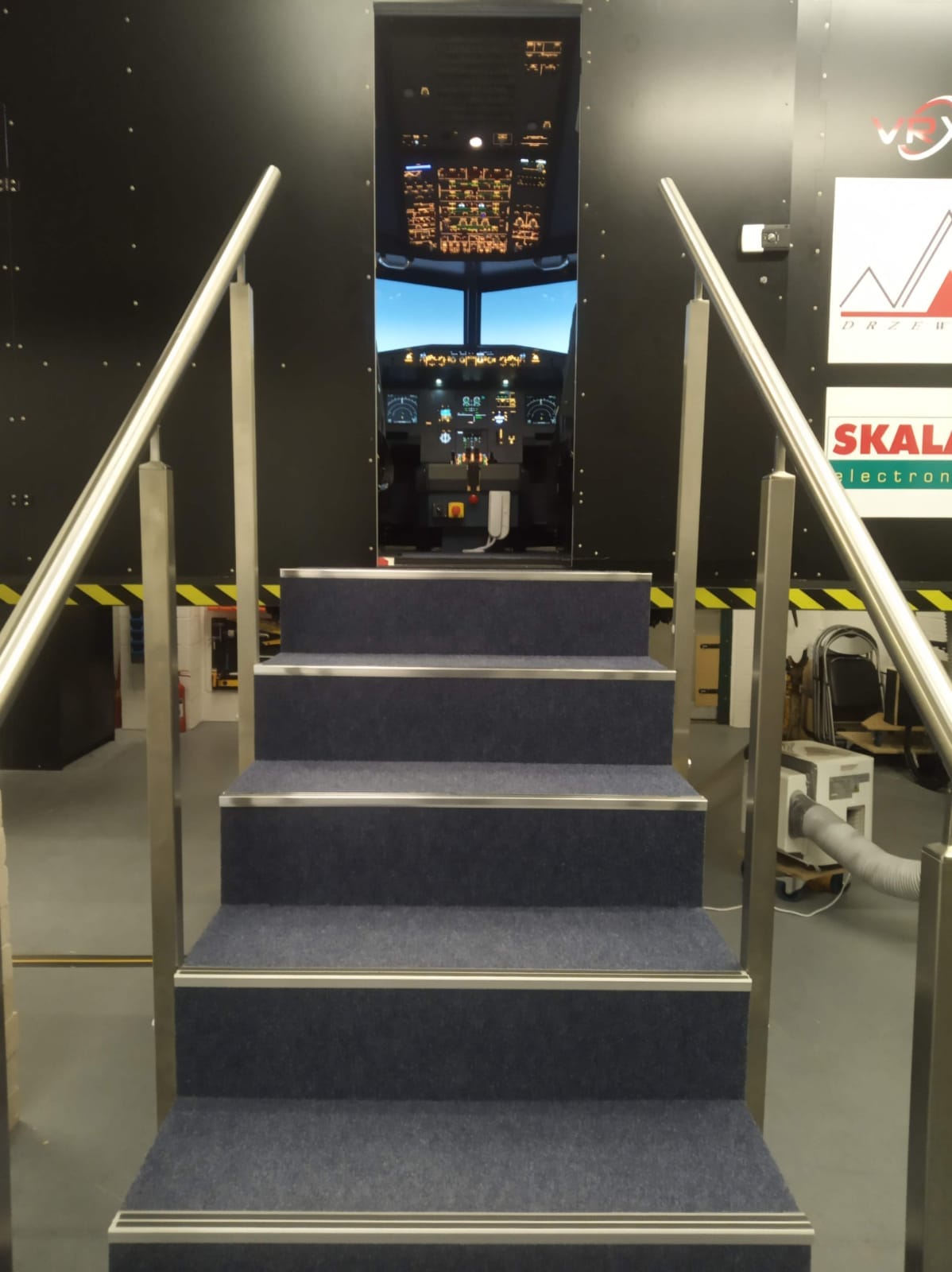
Simulator Adventures
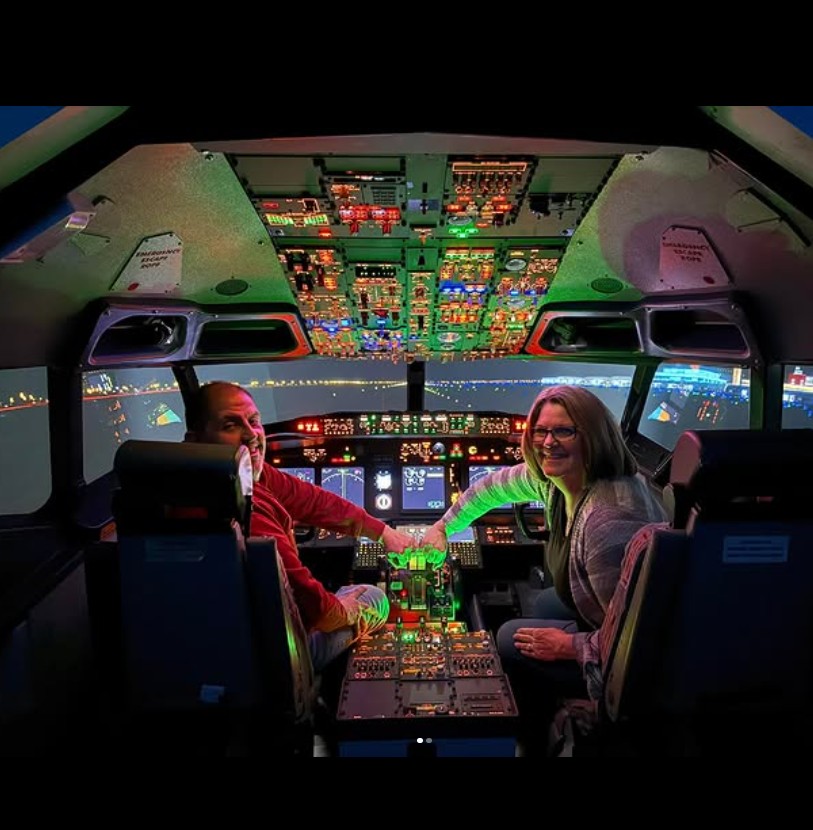
Extreme Flight Simulation
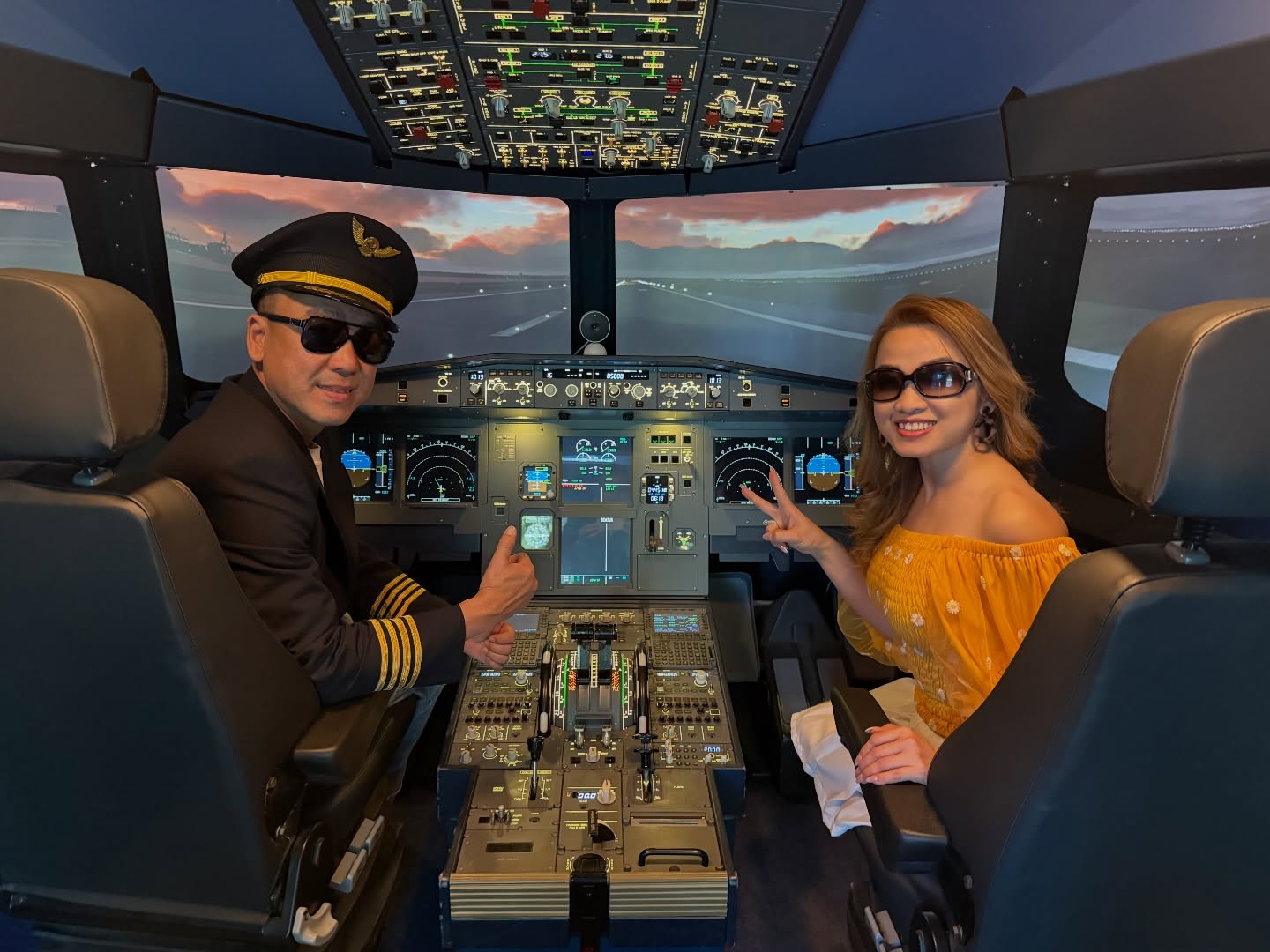
Sydney Flight Simulator
Every Airbus A320 simulator worldwide
Fixed-base vs full-motion A320 simulators
Public A320 experiences come in two broad formats, and the difference matters for both realism and price.
Fixed-base simulators are built around a genuine or replica A320 cockpit that doesn’t physically move. What they lack in motion they often make up for in cockpit fidelity and wrap-around visuals, and they’re typically more affordable — many UK venues start under £100 for a 30 to 60 minute session. For most first-timers, a good fixed-base A320 is more than immersive enough.
Full-motion simulators sit on actuators that physically tilt and move the cockpit to simulate acceleration, turbulence and touchdown. These are closer to the certified devices airlines train on, and the sensation of rotation on takeoff or a firm landing is genuinely convincing. They cost more — often £200 to £400+ — and are worth it if physical realism is what you’re after.
Not sure which to pick? Our full-motion vs fixed-base comparison breaks down the trade-offs in detail.
How much does an A320 simulator experience cost?
Across our directory, publicly bookable A320 sessions range widely by country, format and duration. In the UK, short taster sessions can start from around £40, with typical 60-minute fixed-base experiences landing between £99 and £160, and premium full-motion sessions reaching £295 or more. In the US, the AviaSim network offers A320 sessions from around $89, while Australian venues start near $99.
Price usually tracks three things: whether the simulator moves, how long you’re in the seat, and how much one-to-one instructor time is included. For a fuller breakdown, see our flight simulator cost guide.
Who is an A320 simulator experience for?
The honest answer: almost anyone. Complete beginners are the most common visitors — no experience is needed, and an instructor sits beside you throughout. It’s a popular gift, date, or bucket-list activity precisely because it’s approachable.
Nervous flyers often find an A320 session genuinely useful, because understanding what the aircraft is doing demystifies the parts of flying that cause anxiety. Aviation enthusiasts and aspiring pilots use A320 sessions to experience airline-style procedures before committing to formal training. And home simmers come to feel the real cockpit ergonomics and, in full-motion rigs, sensations a desktop setup can’t reproduce.
Frequently asked questions
Do I need any flying experience to fly an A320 simulator?
No. The vast majority of public A320 experiences are designed for complete beginners, with a professional instructor guiding you from takeoff to landing.
What’s the difference between an A320 and a Boeing 737 simulator?
The A320 uses a side-stick and fly-by-wire controls with envelope protections, while the 737 uses a traditional control column and more direct handling. Many enthusiasts try both. See our Boeing 737 guide.
How long does an A320 simulator session last?
Sessions typically run from 30 to 90 minutes. A 60-minute session is most common and allows a full flight from takeoff to landing at an airport of your choice.
Is a full-motion A320 simulator worth the extra cost?
If physical realism matters to you, yes. For a first experience focused on the cockpit and flying itself, a good fixed-base A320 is often more than enough — and more affordable.
Can I choose which airport I fly from?
At most venues, yes. Modern A320 simulators include thousands of real-world airports, so you can usually request a departure and destination that means something to you.